
INTEROPERABILITY:
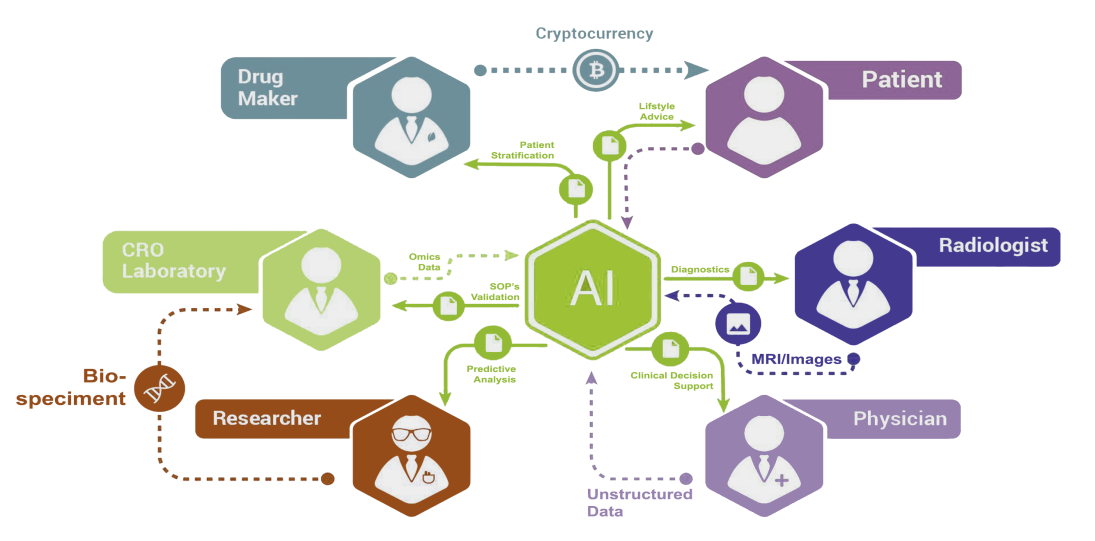
- Interoperability is the ability of different information system, devices and applications to access, exchange, integrate and cooperatively use data in a coordinated manner within across and regional and national boundaries, to provide timely and seamless portability of information.
- Health data exchange, applications interfaces and standards enable data to be accessed and shared appropriately and securely across the complete spectrum of care etc.
CONNECTED CONTACT LENS:

- The vision-based technology, connected or smart contact lenses are an obvious way to explore virtual and augmented reality, and camera technologies.
- Smart lenses are being developed that aim to treat iron-sightedness caused by a loss of elasticity in the lens of the eye known as presbyopia and cataract surgery recovery.
- Swiss company sentiment has developed a non-invasive contact lens called triggerfish, which records the changes in eye dimensions that can lead to glaucoma.
- Sony has applied for the patent for a smart contact lens which can convert eye movement into electrical power, which your control through blinking your eyes.
BLOOD COAGULATION TESTING:

- Roche launched a Bluetooth-enabled coagulation system. The IoT device allows patients to check how quickly their blood clots.
- Roche’s system is the first IoT device explicitly designed especially for anticoagulated patients.
- The system which provides for self-testing was shown to help patients remain within their therapeutic range and lowered their risk of bleeding and stroke.
- The ability of wirelessly transfer results to their healthcare professional meant fewer visits to the medical clinic.
SMART-WATCH APP FOR DEPRESSION:

- Major depressive disorder can be tracked by a smartwatch app used daily by patients to monitor their moods and thoughts.
- There is definite potential for wearable technology to do more than count steps, in this case, it cloud be used to assess the effects of depression in real-time.
- Like the IoT healthcare devices, a depression app could give patients and healthcare providers more insight into the conditions.
CONNECTED CANCER TREATMENT:
- In 2018, data was presented at the American society of clinical oncology annual meeting from a clinical trial of patients all receiving treatment for head and neck cancer.
- The treatments had patients use Bluetooth enabled weight scale and blood pressure cuff, along with a symptoms-tracking app, to send daily updates to patient’s doctors on symptoms and responses to treatment.
- The doctors' cloud adjusts treatment day-to-day based on the data. The patients involved in the trials experienced less severe symptoms related to cancer and the treatment, then those in a control group maintained weekly doctor visits.
ROBOTIC SURGERY:

- Robotic surgery, or robotic-assisted surgery, allows doctors to perform many types of complex procedures with more precisions, flexibility and control than is possible with conventional techniques.
- Robotic surgery is usually associated with minimally invasive surgical procedures are performed through tiny incisions.
HAND HYGIENE MONITORING:

- Research-based on a voice-based electronic hand hygiene monitoring systems showed a 61.4 per cent decrease in healthcare-acquired infections.
- The system includes an audible reminder in the form of a human voice that reminds healthcare facility staff to sanitize their hands.
EFFICIENT DRUG MANAGEMENT:
- The effectiveness of drug treatment is based on its efficacy, tolerability, safety, and acceptability.
- Effective medication management implies that the process of selecting and managing prescribed drugs results in an optimal patient outcome.
- Effectively prescribing medications includes gaining mastery of drug knowledge, learning the nuts and bolts of treatment using the medication, and psychoeducational process in medication management.
- Nurses have the essential role in providing effective medications management, given their direct level of patient contact and their collaborative relationship with physicians.
GPS SMART SOLE:

- This is the new wandering, a tracking device is similar to an orthotic that slides into any size shoes
- It contains a tiny GPS tracking element centred into the pad.
- It runs on a rechargeable battery that lasts 2-3 days. The pads last up to 30 months depending on normal wear and use.
MEDICAL WASTE MANAGEMENT:

- Medical waste management is waste generated from hospitals at various wards. There are different kinds of biomedical waste such as anatomical waste, cytotoxic drugs waste, chemical waste, etc..
- This waste must be transported from hospitals to the common treatment facility where these wastes are recycled using treatment equipment to avoid pollution.

No comments:
Post a Comment